I managed to get registered for the Garycon events I really wanted (yay me!) and the event I'm running filled up (woot!). Now begins the process of getting organized for running two vendor tables there. We'll (Faster Monkey Games) be running our table as well as Goblinoid Games' (the makers of Labyrinth Lord and other fine products).
Gary Con, for those who do not know, is a small con organized by Mr. Gygax's children and several former TSR employees. It is held in Lake Geneva, WI every March to mark the passing of EGG and honor his legacy. It's a small con (a few hundred attendees), but growing (this will be the 5th year). This will be my third GC (I missed 1 & 2).
I'm looking forward to the con a lot. I always have a good time in Lake Geneva. I was first there in 2008, right after Gary Gygax passed away, for the last Lake Geneva Gaming Con (run by Troll Lord Games). I was supposed to play in Gary's "front porch" event. It would have been the first time I'd have met the man, but he died in March and the con was in June. I still had a great time, but there was an understandably subdued quality to the crowd.
Monday, January 28, 2013

Tuesday, January 15, 2013
Little Dungeon on the Prairie
I've been reading my daughters the Laura Ingalls Wilder "Little House" books. Right now we're on "Farmer Boy", but I've been reading ahead a bit. By "a bit" I mean I'm on the 8th book (Hey, they're kids books!). I'd never read them as a kid, so it's interesting to fill in the literary gaps.
In "Big Woods" (the first book), Charles Ingalls (Pa) farms and hunts and traps in and around his tiny farm and log home in the forests of Wisconsin. He and his family live an almost subsistence lifestyle. One or two trip per year to the "town" of Pepin account for the things they cannot easily make or find for themselves, most of which are obtained by trading furs. As time goes on in the series, the Ingalls encounter more and more of the modern era (railroads, threshing machines, store boughten goods, etc.).
Why am I bringing these books up on a gaming blog? Well, it occurred to me that they paint a fascinating picture of a partially pre-industrial lifestyle, tempered with the periodic incursion of "modernity." To me, this depiction of mid-to-late 19th century frontier America carries a lot of material to model your typical farmer/villager in a D&D fantasy world if you put magic in place of technology –hardly a new idea, I know.

In "Big Woods" (the first book), Charles Ingalls (Pa) farms and hunts and traps in and around his tiny farm and log home in the forests of Wisconsin. He and his family live an almost subsistence lifestyle. One or two trip per year to the "town" of Pepin account for the things they cannot easily make or find for themselves, most of which are obtained by trading furs. As time goes on in the series, the Ingalls encounter more and more of the modern era (railroads, threshing machines, store boughten goods, etc.).
Why am I bringing these books up on a gaming blog? Well, it occurred to me that they paint a fascinating picture of a partially pre-industrial lifestyle, tempered with the periodic incursion of "modernity." To me, this depiction of mid-to-late 19th century frontier America carries a lot of material to model your typical farmer/villager in a D&D fantasy world if you put magic in place of technology –hardly a new idea, I know.

Not Pictured: The unicorns in the barn.
A few things in particular draw my gamer eye in these books:
- Just the sheer amount of WORK these people do. Whether it's the Wilders in "Farmer Boy" or the Ingalls in the other books, they are up before dawn and working the whole freaking day! I know, I know; what's in the books may or may not reflect the actual reality of their lives with perfect accuracy, but I think most students of that period would agree that the settlers and homesteaders worked pretty darned hard! Besides, I'm not talking about the history, I'm talking about the stories. In a fantasy game, the peasants probably have it harder than the Ingalls. If you are using a medieval model, they might be serfs. They almost certainly don't own their land, and they likely don't live in a democracy.
- It's also incredibly interesting (to me) to read the first hand account of how things actually got DONE. Need a sled to haul wood? Here's how they built one during a single afternoon! Necessity is the mother of invention, and people who live off the land need certain things to survive but they necessarily can't always just run to the general store and plunk down a few electrum pieces for them.
- As I mentioned before, the juxtaposition between the "old fashioned" (mundane) way of doing things and the modern (magical). In a high magic world, farmers might be able to obtain things like a healing potion for emergency first aid, or a druid might dowse the best place for a well to avoid repeated effort in digging one; but the fact remains that most of their survival depends upon them working hard and sticking to it.
- The Ingalls, and most of the families you meet in the books, are fairly straitlaced protestants. Their religion, their work ethic, and their sense of morality is pretty inflexible. Rural folk in the preindustrial age tended to be pretty insular, if not downright close-minded. That's not to say the same things never happened in cities, but it was certainly common enough in the countryside. Peasants and farmers and villagers are not known for being real open to weirdness, especially if it flies in the face of established social mores. Your character might be a barbarian from the wild steppes of Angabolg, whose cultural dress is a tattered loincloth made of the warrior's first kill, but if he comes to a remote village where a man without a hood on might as well be naked, he may not to be well-received. That's not to say that the puritanical standard should be universal among farmers; but whatever they believe, they tend to have believed it for a long time and won't adapt quickly.
- The value of things might be a bit different when one is far from "civilization." How much is that ruby bracelet worth in a town that has maybe 50gp in coin total? It's like if the US Congress went ahead with the trillion dollar coins idea and somebody stole one. What could they do with it? Ask for change?? Value is assigned by the market. Read: the buyer(s). Some farmer isn't going to sell you his food in the middle of a blizzard if it means his family starves. How would he spend those coins if he can barely reach the barn to milk the cow? In a society where a large percentage of the population is operating without much of a safety net, they tend to look out for themselves. That's not to say they're necessarily heartless, just pragmatic. Sure, they might let you stay until the storm blows over and even share their dinner with you, but if you want to buy his horses, he'll say no unless he's real confident he A) won't need them right away, B) gets enough money to buy new ones, and C) will find any available in time for him to do things like harrow and plow for the spring crops.
I think sometimes we (gamers) tend to think that our culture and era's realities can be applied to these imaginary times and places. While I do think that many parts of human life are nearly universal, it's interesting to see how people used to live and think and see how different it might be. It's also fun to think about applying those things to the game and how it may change what the players can or can't do.
Friday, December 28, 2012
Movie Review: The Hobbit

"In a hole in the ground, there lived a hobbit."
HELL YEAH!
(Like my John Carter review, the first part of this is spoiler-free, but honestly now; if you've never read the book or at least seen the animated Rankin-Bass cartoon or you haven't gone to see the film already, you are unique among my tiny readership.)
First of all, let me say I liked it. I liked it nearly as much as I enjoyed it when I first saw Jackson's Fellowship in the theater. Now, I saw FOTR five times in the theater, and I probably won't do that this time (Of course, I didn't have kids back in 2001, so that's a factor in my theater-going record since then.)
Hobbit is Hollywood-ized a bit compared to the books, but then so were the LOTR films. A few liberties were taken with some details, but the overall plot stayed true to the source. I was amused to see what looks like unused or prepared well in advance footage of Bilbo and Frodo (Sir Ian & Mr. Wood) during the prelude. It was a nice touch, I thought.
Martin Freeman does a wonderful job as the younger Bilbo. His flustered Brit is perfect for a Baggins who is swept off his feet and out his door into the wide world beyond. The dwarfs made sincere efforts to distinguish themselves among the throng, but tended to blur together at times. Perhaps by the next film they'll each have had more screen time to establish their personas in our minds.
Cosmetically things worked well. I will say that I would have liked an older-looking Thorin (he was nearly 200 at the end of the book), and a Kili with a real beard (at least a goatee, but STUBBLE? C'mon!)
The biggest issue I've heard about the film is the pacing. A few areas do seem to drag a little. It all comes back to the decision to make it into three films. I too find myself scratching my head at the concept. There simply isn't enough book there for a trilogy of 3 hour films. They are including material about Gandalf and the Necromancer (a topic only touched on in the source material), but even so, it seems excessive. I will give Peter Jackson the benefit of the doubt for now, though.
Now comes the spoiler-ish part:
The movie covers from the start (including exposition about Smaug coming to the Lonely Mountain) through the eagles taking the group to the Carrock. Which –if you're looking at the plot covers approximately a third of the book's substance– so good choice there.
I liked the scene with the trolls (the first real crisis faced by Bilbo & co.). There were a few small changes to the plot, but mostly superficial ones. The trolls were comical, yet menacing. The dwarfs put up a better fight in the film than the books, but having one sack after another plop down over the dwarfs' heads would have been dull viewing, in my opinion.

Rivendell was gorgeous, as expected. Elrond seemed in a less somber mood for most of it, but that was fitting considering the nature of his visitors. The White Council bit was interesting and provided some obscure (but canon) explanation for Gandalf's real interest in Smaug. He knows trouble is brewing. I tmay be a ways off, but its coming. He does NOT want an ancient dragon like Smaug in the equation. So, Gandalf seeks to find a way to remove him. He cannot find someone to slay the wyrm, so he helps the dwarfs on their way to -aheh- beard the lion in its den. I assume he hopes they will act as a catalyst and bring the situation to a head prematurely, though it seems a bit callous to me. Who knows? I won't meddle in those affairs.
The trip into the mountains and the giants were pretty cool, but present a fairly different view of Middle Earth than the LOTR films, where half a mountain will stand up and chuck the other half at some other titanic rock-creature just for giggles.
The secondary characters were hit or miss. I was nonplussed about the inclusion of Azog as a persistent antagonist, but I can see the dramatic opportunities it presents. I was pleased to see the inclusion of Radagast (a character I've always been fond of), but he was too comical for my taste. Perhaps it was an attempt to appeal to children (my friend's kids LOVED Radagast). I found the depiction of the Great Goblin –and Goblin Town– a lot of fun, but I understand how some people found it goofy. (More on that in a moment.) But first, Gollum.

What has it gots in its pocketses? An Oscar nomination!?
I thought Serkis was robbed of a Best Supporting Actor nomination back in Two Towers. He was that good, IMO. The whole CGI thing made the Academy feel it wasn't a "real" role, but animation (different category). Gollum is every bit as good in Hobbit. I even like how they deal with him losing the Ring. The riddling is nigh perfect, too.
Okay, moving on. the movie finishes up with the dwarfs escaping Goblin Town in a Rube Goldberg-esqe fashion, reaching the woods and reuniting with Bilbo, only to get cornered by goblins and wargs, including our buddy Azog again. The resulting brouhaha is again, more Hollywood action flick than the book, but suitably impressive-looking. Bilbo gets a little bit badass by tackling an orc, but what the heck at this point. Again, like many scenes, it probably could have been a few minutes shorter but they have to fill the screen time somehow. The eagles arrive and rescue the group and take them straight to the Carrock. Everyone is in one piece (more or less), but definitely in need of some help. The perfect set up for them to go have a conversation with a giant werebear, don't you think?

Thank you for flying BIG FREAKING BIRD Air™
There is a final scene where we see Lonely Mountain and the massive hoard inside with a teasing peek at Smaug, but the big reveal is saved for later (as well it should be).
Overall, the film is solid. It's not epic, but it doesn't need to be. There and Back Again was originally a children's book, not a sweeping saga. There are whimsical elements present that are simply lacking in LOTR for the simple reason that the latter is intended for a different audience. If anything, I think the films might benefit from being shorter, lighter in tone, but faster paced. One film is probably not enough, but two long or three normal length movies would be ample, I'd think. I expect we'll see a lot of action time taking up in Smaug's attack on Lake Town and the Battle of Five Armies toward the end.
Wednesday, December 5, 2012
RMA: Sea Dragons

Seriously, has anyone ever used this monster? If not, we're all doing a TERRIBLE job as DMs!
What's more classic than a sea monster?
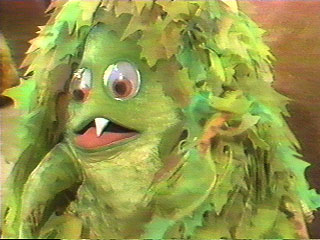
...Just don't, okay?
Anyone who has read my RMAs has seen me comment on aquatic encounters and their relative rarity, so I have been kind of avoiding doing more of that theme. This fella deserves a mention, though. So let's get started:
Sea Dragon (from Cook)
No. App: 0 (1d4)
AC: 1
HD: 8
AL: N
Move: 180' (60')
(Swimming or Flying)
Attacks: 1 (bite or spit)
Damage: 3d8
Save: F8
Morale: 9
Treasure: H
For starters, it doesn't look all that impressive. 8HD is okay, but not awesome. A decent armor class as well, and the damage from its bite isn't really terrifying, either. So what's so cool about Sea Dragons?
- All the usual reasons fighting at sea is challenging.
- They are intelligent, hence the so-so morale (live to fight another day, etc.). There is a 20% chance they speak. If so, that means they are automatically packing SIX spells (3 @ 1st, 3 @ 2nd level MU/Elf). That's a bit scary.
- Their "breath" attack is a poisonous gob of spit TWENTY FEET in diameter with a range of 100'! (eww!) Don't forget, kids; that's 100 YARDS in the wilderness (p.X19), which is precisely where these fellas are likely to show up! The poison loses effectiveness after 1 round, but it's save or die. By the way, that's a save vs. Dragon Breath, not Poison, which means characters are MORE likely to fail.
- They can pull a "flying fish." They leap out of the water and glide for up to six rounds. They can cover a lot of distance in that time, possibly getting an air-to-surface poison loogy off in the process.
- They can breathe underwater, so no sense waiting for them to come up for air. Their lairs are underwater too (often at the sea's bottom in a shipwreck or a cave), so even if you beat the thing, finding and getting that sweet, sweet Type H loot is its own challenge.
- I don't even want to talk about the whole "1d4" appearing thing!
Keep in mind also that these are the AVERAGE stats for the Sea Dragon. The book allows for ± up to 3 HD depending on age.
So give it up for the dragon's wet behind the ears cousin!

Monday, November 19, 2012
RMA (ish): NPC parties
Cook's Expert Rules typically tries not to step on the toes of its predecessor, Moldvay's Basic. One area where BX does sort of repeat itself is with NPC parties.
Each book provides rules for the DM to use in creating a group of NPCs. Because of the change in PC power levels, things get ramped up a notch in Expert. Moldvay allows for up to 3rd level NPCs, whereas Cook gives rules for up to 12th.
I find both books' sections on this very interesting reading. Not just for encounter design, but also for the steps given for creating the parties. There is a lot of randomness in the process. I find that refreshing, though. Sometimes random results are the most interesting. There's a chaotic fighter and lawful cleric in the group? How does that work? Especially if one is significantly more powerful than the other. This can make for some interesting moments at the gaming table.
Fun fact: NPC spells are supposed to be assigned randomly! I love it when characters (NPC or PC) have some of the more unusual spells.
Another interesting part is the assigning of magic items to the NPCs. In Basic, you roll on a treasure type for the NPCs. In Expert, a % chance is assigned (determined by level) for each NPC to possess a given type of item. The fact these non-PCs are walking around with magic loot (and using up that cool wand's charges) should get the PCs interested.
I think a rival group of adventurers is an awesome encounter, and provides a lot of possible campaign hooks for a group. Even if the PCs don't end up fighting them, having another group of murder-hobos out there after the treasure is a powerful incentive to get off their duffs and DO something!
I have half a mind to assemble an NPC party by these rules and use them as pre-gens for my next adventure. The result could be fun!

Each book provides rules for the DM to use in creating a group of NPCs. Because of the change in PC power levels, things get ramped up a notch in Expert. Moldvay allows for up to 3rd level NPCs, whereas Cook gives rules for up to 12th.
I find both books' sections on this very interesting reading. Not just for encounter design, but also for the steps given for creating the parties. There is a lot of randomness in the process. I find that refreshing, though. Sometimes random results are the most interesting. There's a chaotic fighter and lawful cleric in the group? How does that work? Especially if one is significantly more powerful than the other. This can make for some interesting moments at the gaming table.
Fun fact: NPC spells are supposed to be assigned randomly! I love it when characters (NPC or PC) have some of the more unusual spells.
Another interesting part is the assigning of magic items to the NPCs. In Basic, you roll on a treasure type for the NPCs. In Expert, a % chance is assigned (determined by level) for each NPC to possess a given type of item. The fact these non-PCs are walking around with magic loot (and using up that cool wand's charges) should get the PCs interested.
I think a rival group of adventurers is an awesome encounter, and provides a lot of possible campaign hooks for a group. Even if the PCs don't end up fighting them, having another group of murder-hobos out there after the treasure is a powerful incentive to get off their duffs and DO something!
I have half a mind to assemble an NPC party by these rules and use them as pre-gens for my next adventure. The result could be fun!

Thursday, November 15, 2012
Fee Fie Fo- you get the idea
My group is getting ready for a run through of G1: Steading of the Hill Giant Chief. It's been over 20 years since I played any part of the module, so it should be a fun time. (We're using LL+AEC if you're interested.)
Anyhow, this got me thinking about GIANTS. Even in BX, you've got the six varieties, in escalating size and power: Hill, Stone, Frost, Fire. Cloud, and Storm. I've often wondered why so many? It's kind of like dragons, I suppose, where the authors wanted to include lots of good bits from mythology and folklore, but not lump them all together in one monster.

One thing that strikes me about all the giants is the treasure. They all have the same type ("E") plus 5000gp. (The ogre –aka "Giant Lite"– is similar with Type C + 1000gp). Where does this come from? Jack & the Beanstalk? Mythology? Probably a combination. Regardless, giants are a pretty lucrative monster to fight.
Hill Giants seem to be basically bigger, tougher ogres. Primitive brutes who eat just about anything.
Stone Giants are fun with their bouder flinging skills and pet bears. A pair of 9HD giants + up to four cave bears is a scary place!
Frost Giants are the first "supernatural" giants, obviously borrowing a little from the Norse myths with their cold immunity. They like to keep polar bears and wolves about. Even just one of these blue meanies is a truly challenging encounter.
Fire Giants –based (I think) on Surtr from the Norse as well– are also magical, with fire immunity. They also keep nasty pets (hell hounds and hydras).
Cloud Giants have got that castle in the sky/beanstalk thing going on. Giant Hawks hang out with them if their lair is airborne.
Storm Giants are frankly weird. Maybe they're in the sky, or MAYBE they're on a mountain, or MAYBE they're underwater! Who knows?? They are the biggest and toughest of the bunch, but like (gold) dragons, the toughest is also the most likely to be the nicest with their Lawful alignment. Their storm powers are impressive as well.
I'm not sure I have a point to all this other than reflecting on these iconic creatures and seeing all the interesting little rules that were included with them.
...Also to mention that a Girdle of Storm Giant Strength is a potential campaign wrecker!
Anyhow, this got me thinking about GIANTS. Even in BX, you've got the six varieties, in escalating size and power: Hill, Stone, Frost, Fire. Cloud, and Storm. I've often wondered why so many? It's kind of like dragons, I suppose, where the authors wanted to include lots of good bits from mythology and folklore, but not lump them all together in one monster.

One thing that strikes me about all the giants is the treasure. They all have the same type ("E") plus 5000gp. (The ogre –aka "Giant Lite"– is similar with Type C + 1000gp). Where does this come from? Jack & the Beanstalk? Mythology? Probably a combination. Regardless, giants are a pretty lucrative monster to fight.
Hill Giants seem to be basically bigger, tougher ogres. Primitive brutes who eat just about anything.
Stone Giants are fun with their bouder flinging skills and pet bears. A pair of 9HD giants + up to four cave bears is a scary place!
Frost Giants are the first "supernatural" giants, obviously borrowing a little from the Norse myths with their cold immunity. They like to keep polar bears and wolves about. Even just one of these blue meanies is a truly challenging encounter.
Fire Giants –based (I think) on Surtr from the Norse as well– are also magical, with fire immunity. They also keep nasty pets (hell hounds and hydras).
Cloud Giants have got that castle in the sky/beanstalk thing going on. Giant Hawks hang out with them if their lair is airborne.
Storm Giants are frankly weird. Maybe they're in the sky, or MAYBE they're on a mountain, or MAYBE they're underwater! Who knows?? They are the biggest and toughest of the bunch, but like (gold) dragons, the toughest is also the most likely to be the nicest with their Lawful alignment. Their storm powers are impressive as well.
I'm not sure I have a point to all this other than reflecting on these iconic creatures and seeing all the interesting little rules that were included with them.
...Also to mention that a Girdle of Storm Giant Strength is a potential campaign wrecker!
Wednesday, October 24, 2012
New Monster: Time Goblins
While talking with my wife, I made a common lament. "Where does the time go in a day?" Her glib reply, "Time Goblins. They eat it." That stuck in my head, and here is the result.

Time Goblins
No. Appearing: 1 (1d6)
AL: C
HD: 1d4 hp
AC: 7 (1 when invisible)
Move: 30', special
Attacks: 1
Damage: 1d4, special
Save As: F1
Morale: 8
Treasure: see below
Time goblins look like small (≈1' tall), pale goblins when they can be seen at all. They have the innate ability to turn invisible at will and are quite adept at sneaking around.
Time goblins do not typically attack with force. They prefer to stealthily rob those who pass too close to their lairs. They do not steal trinkets or coins, though. What they take is time.
Once per day, a time goblin can "steal" an hour from a group of up to ten people. There is no saving throw. The party is simply an hour further along in time than they thought. The day is simply that much closer to over. Any wandering monster rolls or replenishing of things like torches that should have occurred in that time happen at the end of the missing hour. If the party was moving when the hour was taken, a rest break is needed as well.
No one knows what happens to the time, but it is believed that it somehow lengthens the time goblin's lifespan, often making them nigh-immortal.
Time goblins usually live alone, but sometimes small warrens of them can be found beneath fairy rings or in tunnels and caves. There is a 10% chance that, hidden in the warren, is a small crystal bottle of wine. Drinking the contents acts as a single dose of a Time Stop potion (2 round duration).
urp!
Time Goblins
No. Appearing: 1 (1d6)
AL: C
HD: 1d4 hp
AC: 7 (1 when invisible)
Move: 30', special
Attacks: 1
Damage: 1d4, special
Save As: F1
Morale: 8
Treasure: see below
Time goblins look like small (≈1' tall), pale goblins when they can be seen at all. They have the innate ability to turn invisible at will and are quite adept at sneaking around.
Time goblins do not typically attack with force. They prefer to stealthily rob those who pass too close to their lairs. They do not steal trinkets or coins, though. What they take is time.
Once per day, a time goblin can "steal" an hour from a group of up to ten people. There is no saving throw. The party is simply an hour further along in time than they thought. The day is simply that much closer to over. Any wandering monster rolls or replenishing of things like torches that should have occurred in that time happen at the end of the missing hour. If the party was moving when the hour was taken, a rest break is needed as well.
No one knows what happens to the time, but it is believed that it somehow lengthens the time goblin's lifespan, often making them nigh-immortal.
Time goblins usually live alone, but sometimes small warrens of them can be found beneath fairy rings or in tunnels and caves. There is a 10% chance that, hidden in the warren, is a small crystal bottle of wine. Drinking the contents acts as a single dose of a Time Stop potion (2 round duration).
Subscribe to:
Posts (Atom)